Are Childhood Limiting Beliefs Keeping You Stuck? Here's the Truth About Breaking Free

You know that voice in your head that whispers "you're not good enough" right before a big opportunity? Or the one that says "people like you don't succeed" when you're about to take a risk? That's not your inner wisdom talking – that's a childhood limiting belief that's been running the show for way too long.
If you've been feeling stuck in patterns you can't seem to break, there's a good chance these invisible mental chains from your past are holding you back. The truth is, most of us are walking around with a whole collection of beliefs we picked up as kids that are quietly sabotaging our adult lives.
What Are Childhood Limiting Beliefs?
Limiting beliefs are those deep-seated thoughts about yourself, others, or the world that feel absolutely true but actually hold you back from reaching your potential. They're like invisible filters that distort how you see every situation and decision in your life.
These beliefs typically form during childhood when your brain was like a sponge, soaking up everything around you. A critical comment from a teacher, watching a parent struggle, or experiencing rejection can create lasting mental patterns that follow you into adulthood.
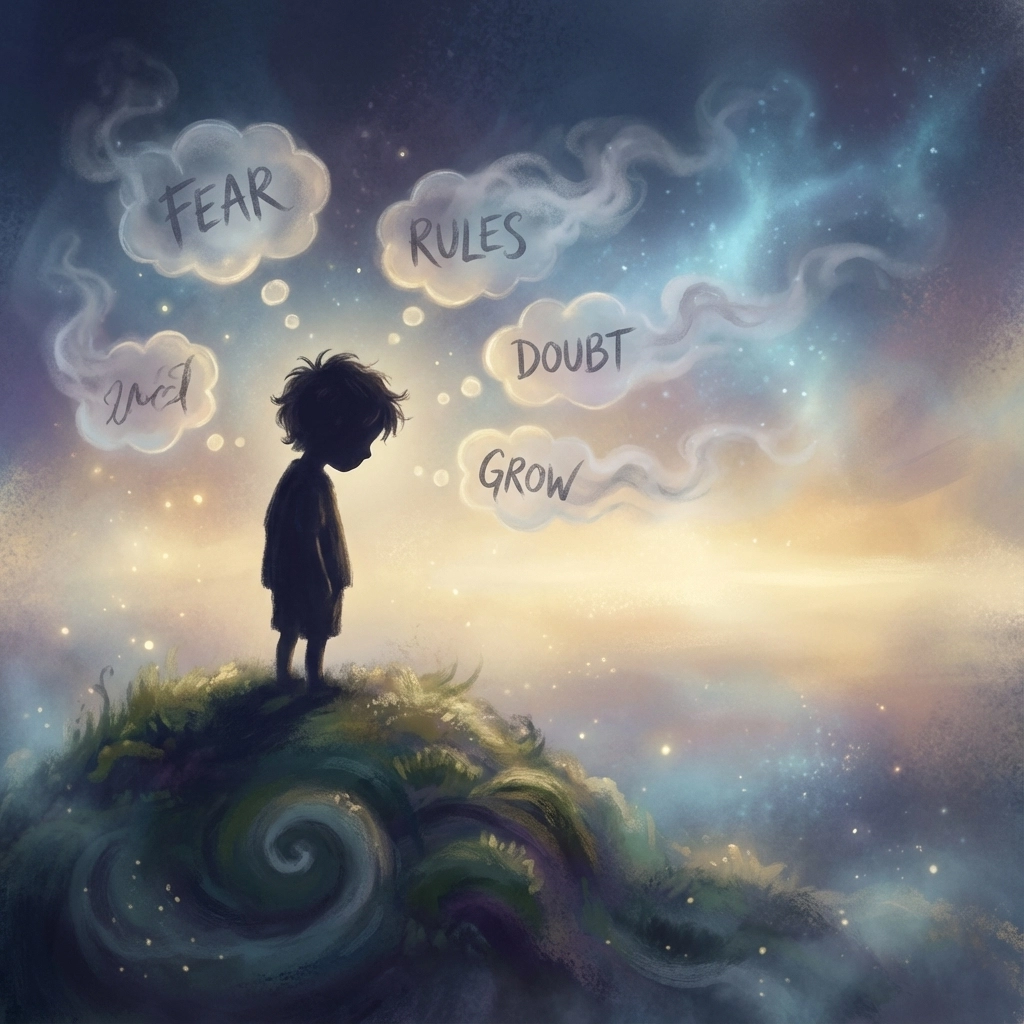
The tricky part? Your childhood brain didn't have the wisdom to question these experiences. It just absorbed them as universal truths. So when your third-grade teacher said you were "not math material," your young mind filed that away as fact, not opinion.
How These Beliefs Keep You Stuck in Loops
Here's where it gets really sneaky. Limiting beliefs don't just sit quietly in your mind – they actively shape your behavior in ways that prove them "right."
Let's say you absorbed the belief "I'm not smart enough" as a kid. Fast forward to your adult life, and this belief might show up as:
Procrastinating on important projects because "what's the point?"
Not speaking up in meetings even when you have great ideas
Avoiding opportunities for advancement
Sabotaging yourself right before success
The worst part? Every time you act on these beliefs, you reinforce them. When you don't speak up in that meeting, your brain says, "See? We really aren't smart enough." It's a self-fulfilling cycle that can keep you trapped for decades.
These beliefs become what psychologists call "unconscious filters." They influence how you interpret people's reactions, your own abilities, and even your internal emotional state. What feels like "just the way things are" is actually a learned pattern that you can unlearn.
Why These Beliefs Feel So Real and Stick Around
If limiting beliefs are so harmful, why does your brain hold onto them so tightly? There are actually some very human reasons for this.
First, they served a purpose when you were young. If you learned "don't trust people" after being hurt, that belief might have protected you from further pain as a child. The problem is your adult brain still thinks it needs that same protection.
Second, these beliefs keep you in your comfort zone. Your brain prioritizes feeling safe over feeling fulfilled, so it prefers the familiar discomfort of limitation over the uncertain territory of growth and change.

Third, there's something called confirmation bias at work. Your brain naturally looks for evidence that supports what it already believes while filtering out contradictory information. If you believe you're "bad with money," you'll notice every financial mistake while overlooking your smart financial decisions.
Signs You're Being Held Back by Childhood Programming
Sometimes limiting beliefs are obvious – they're the harsh voice criticizing everything you do. But often they're more subtle. Here are some signs that childhood programming might be running your adult life:
Recurring patterns that don't make logical sense: You keep finding yourself in the same frustrating situations with jobs, relationships, or money, despite your best efforts to change.
Immediate "no" reactions: When opportunities arise, your first instinct is to explain why you can't or shouldn't try, before you've even really considered the possibility.
Comparing yourself to others constantly: You measure your worth against everyone around you and usually come up short.
Physical stress responses to growth opportunities: Your body tenses up, your stomach knots, or you feel exhausted when facing chances to expand or improve your life.
Dismissing compliments: When people recognize your strengths or achievements, you immediately deflect or minimize their words.

Playing it safe consistently: You choose the predictable option even when the riskier choice could lead to something much better.
If you're nodding along to several of these, you're not broken – you're human. And more importantly, you're ready to start breaking free.
The Truth About Breaking Free
Here's what most people don't realize: you don't have to live with these beliefs forever. Your brain remains changeable throughout your entire life, which means you can literally rewire these old patterns.
The process starts with recognition. You can't change what you can't see, so begin paying attention to that inner dialogue. When you catch yourself thinking "I can't do that" or "I'm not the type of person who...", pause and ask: "Is this actually true, or is this an old belief talking?"
Challenge the evidence. Limiting beliefs feel true because you've been collecting evidence for them for years. But what evidence exists against them? If you believe "I'm terrible at relationships," what about the friends who seek your advice? The family members who trust you? The connections you've maintained over time?
Develop a growth mindset. This means viewing your abilities and intelligence as malleable rather than fixed. Instead of "I'm not good at this," try "I'm not good at this yet." That simple word changes everything about how your brain approaches challenges.
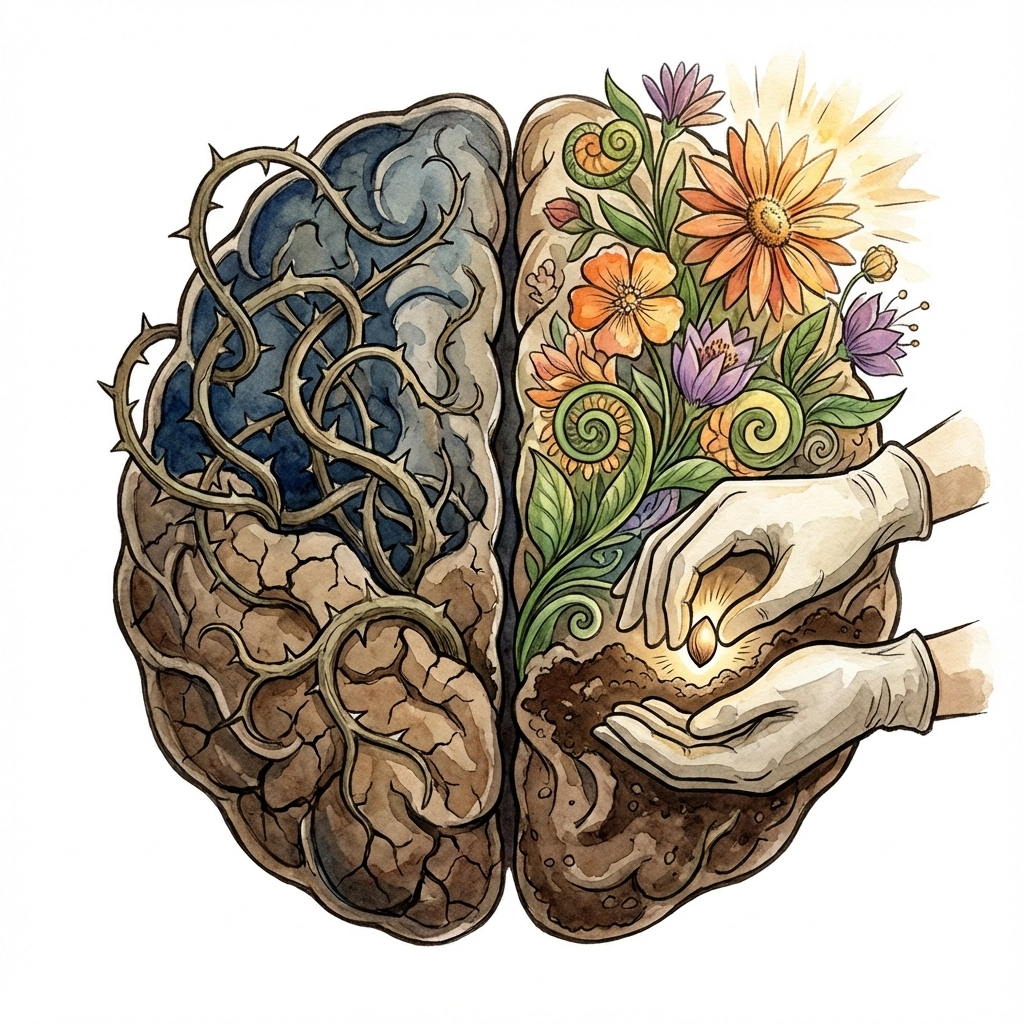
Take small actions against the belief. If you believe "I'm not a leader," volunteer to lead one small project. If you think "I'm bad with money," make one small improvement to your financial habits. Action creates new evidence that contradicts old programming.
Practice self-compassion. This work isn't about beating yourself up for having these beliefs in the first place. They made sense given what you experienced as a child. Now you have adult wisdom and choice.
Rewriting Your Story
The beautiful thing about being human is that you get to choose what you believe about yourself moving forward. Those childhood experiences happened, but they don't have to define your future.
Every limiting belief can be rewritten. "I'm not smart enough" becomes "I'm capable of learning anything I commit to." "I don't deserve good things" becomes "I'm worthy of love and success." "People can't be trusted" becomes "I can learn to identify trustworthy people while protecting my boundaries."
This isn't about positive thinking or pretending painful experiences didn't happen. It's about recognizing that your child-self did the best they could with limited information, and now your adult-self gets to make new choices.

The work takes time and patience, but every step forward creates momentum. As you begin acting from your new beliefs instead of your old programming, you'll start experiencing different results. And those new results become evidence for who you're becoming rather than who you used to think you were.
Your childhood limiting beliefs have kept you stuck long enough. It's time to give yourself permission to grow beyond them and step into the life you're actually capable of creating.
Remember: the goal isn't perfection – it's progress. Every time you choose growth over safety, truth over familiar lies, you're literally reshaping your brain and rewriting your story.
The person you're meant to become is waiting on the other side of these old beliefs. Are you ready to meet them?
Ready to start identifying and transforming your limiting beliefs? Visit Belief Make Over to learn more about breaking free from the patterns keeping you stuck.
Comments